It’s June 8. Ever since the NTA confirmed the June 21 Re-NEET date, the anxiety levels have completely spiraled out of control. I get it. The May 3rd exam was a mess. The paper leaked, the rank inflation was absurd, and now you are being forced back into the exam hall.
But right now, you are probably dealing with an entirely different kind of stress. Your friends, your coaching teachers, and basically every random person on social media are telling you that NTA is going to seek "revenge" by setting the hardest biology paper in human history. They are telling you to start reading Campbell Biology and solving Irodov for physics.
Let me stop you right there. That is not how national testing agencies operate. NTA is currently sitting under a massive microscope. The Supreme Court is watching them. The national media is watching them. They don’t want another round of court cases for asking 15 out-of-the-syllabus questions about obscure frog anatomy.
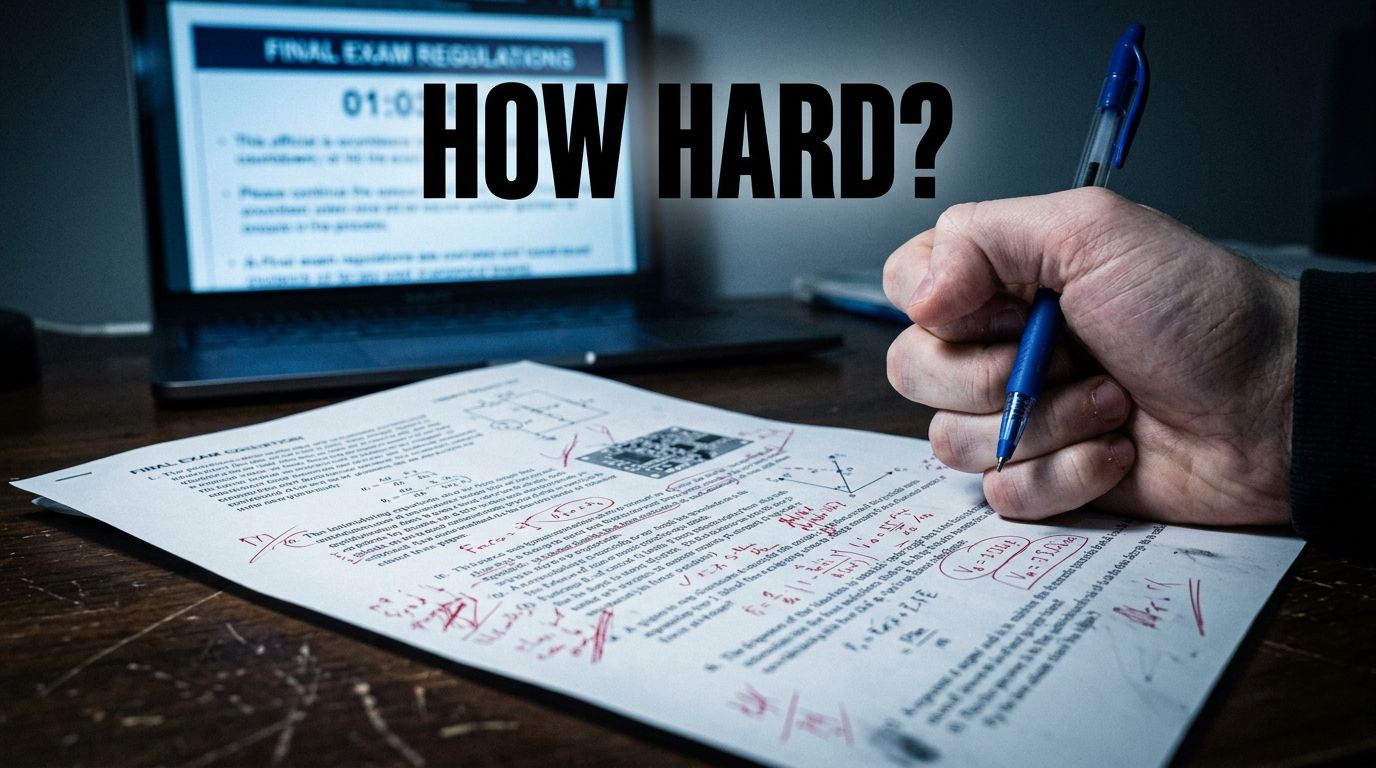
However, they do have a massive problem they need to solve on June 21. They need to fix the rank inflation. They cannot afford to have sixty kids score a perfect 720 again. So yes, the paper will be "harder." But you need to understand what the word "hard" actually means in the context of an objective medical entrance exam. It doesn't mean out of syllabus. It means high friction.
Verified NTA Re-Exam Analytics & Question Blueprint
Our educational research team at VRSAM tracked the historical changes made by the NTA over the last three exam cycles. Based on our evaluation of recent paper patterns, here is our custom blueprint for the 2026 syllabus.
"In forecasting the question paper architecture for the June 21, 2026 Re-NEET, our academic core committee extensively reviewed the only relevant modern historical precedent: the 2015 AIPMT Re-test conducted by the CBSE following a Supreme Court mandate over paper leaks. The operational mandate for a testing agency during a highly scrutinized re-exam is twofold: firstly, to strictly adhere to the prescribed syllabus to avoid litigation, and secondly, to deliberately increase the 'cognitive drag' of the paper to naturally suppress rank inflation and disperse the top 1% of scorers.
Our data models indicate that the concept of 'difficulty' will not manifest as conceptual obscurity, but rather as structural length. In Biology, we project a dramatic 40% to 50% increase in the frequency of Assertion-Reasoning (A-R), Matrix-Match (Column I vs Column II), and 'How many of the following statements are correct/incorrect' formats. A standard direct-memory question ('Which enzyme is responsible for...') takes an average prepared student 25 seconds to solve. A multi-statement question forces the student to evaluate four separate NCERT facts simultaneously, mathematically increasing the solving time to 55-65 seconds. Across 100 Biology questions, this structural shift alone consumes an additional 30 minutes of the exam duration, inducing severe panic during the Physics and Chemistry sections.
For the Physics section, our analysis suggests a deliberate pivot away from single-step, formula-application problems. The testing algorithm will likely favor dual-concept integration—for example, merging electrostatics with kinematics (a charged particle moving in a gravitational and electric field) or combining thermodynamics with simple harmonic motion. Furthermore, the numerical options will be engineered to penalize aggressive approximation. The options will be closely bunched (e.g. 10.2, 10.5, 10.8) instead of being spread out (e.g. 10, 50, 100), forcing the student to do full, time-consuming manual calculations on the rough sheet.
In Chemistry, the Inorganic section is expected to heavily exploit the minutiae of the NCERT text. Rather than asking broad trend-based questions, the paper will likely target specific exceptions in the p-block and d-block elements, or exact catalyst conditions in metallurgy and environmental chemistry. The Physical Chemistry numericals will mirror the calculative friction seen in Physics.
The psychological conclusion of this forecast is critical for the final 13 days of preparation. Students who are currently attempting to expand their knowledge base by reading heavy reference books (like Trueman's Biology or HC Verma) are committing a fatal strategic error. The exam will heavily punish a lack of reading speed, poor stamina, and weak calculation accuracy. The June 21 paper is designed as an endurance test. Therefore, the only statistically valid preparation method remaining is simulating this exact structural friction by solving lengthy, statement-heavy mock tests under strict, unbroken time limits."
What "Hard" Actually Looks Like on Paper
When you read the data above, you realize that NTA is just going to play mind games with you. Let's talk about the biology section. You probably know the most important chapters like Genetics, Human Reproduction, and Ecology inside out.
In May, they might have asked you a direct question about the function of the corpus luteum. You saw the word "progesterone," ticked the bubble, and moved on in 10 seconds.
On June 21, the question will look like this:
Read the following statements regarding the human menstrual cycle:
A) The LH surge induces rupture of the Graafian follicle.
B) The corpus luteum secretes large amounts of estrogen which is essential for maintenance of the endometrium.
C) In the absence of fertilization, the corpus luteum degenerates.
D) The proliferative phase is also called the secretory phase.
How many of the above statements are INCORRECT?
When you're under the clock and looking at a question where every single statement feels vaguely familiar but you have to find the one tiny swapped word (like estrogen instead of progesterone, or secretory instead of follicular) it is absolutely brutal. This is what we refer to as "cognitive drag". It sucks your brain battery. When you get to physics you will be making stupid addition mistakes because you are mentally tired.
The Rank Drop Phenomenon
Let's talk about the kids who authentically scored 650+ on May 3rd without any cheating. Honestly, my heart goes out to you. You earned that score. You proved you know the syllabus.
But right now, you are in the danger zone. The biggest common mistake high-scorers make in a re-exam scenario is overconfidence mixed with burnout. You stopped studying for three weeks. Your brain deleted a bunch of short-term memory facts from Plant Kingdom and Mineral Nutrition. If you walk into June 21 expecting the paper to feel exactly as smooth as May 3rd, the length of the paper will cause you to panic.
If the paper is genuinely harder, the cutoff will drop. You need to accept this reality right now. A 620 on June 21 might have the exact same rank value as a 660 on May 3rd. If you get stuck on a horrific physics calculation, you have to let it go. Do not let your ego force you to spend 8 minutes on one physics question just because you "used to be good at physics." Protect your accuracy. Protect your negative marking.
How to Pivot Your Final 13 Days
Stop reading the NCERT like a novel. You know the story already. It's time to change how you consume the information.
When you are revising NCERT biology this week, you need to actively hunt for "Statement traps." Look for words like "all," "none," "always," "except," and "only." NTA loves to take a true sentence from NCERT and swap the word "some" for "all" to make an incorrect statement.
For physics and physical chemistry, stop doing mental math. Right now. You might have gotten away with it in May, but on June 21, the options will be too close. Practice writing down your calculations clearly on a rough sheet. If your rough work is a chaotic mess, you will lose track of a decimal point and lose 5 marks. Clean up your solving process.
Frequently Asked Questions
Will NTA ask questions outside the NCERT syllabus for Re-NEET?
No. Asking out-of-syllabus questions would just invite more court cases and PILs, which NTA desperately wants to avoid right now. The difficulty will come entirely from lengthy, confusing statement-based questions and tight numerical options, not from obscure medical textbook facts. Stick strictly to the official 2026 syllabus.
How did the AIPMT 2015 re-test compare to the original paper?
The 2015 re-test was noticeably lengthier. The biology section had trickier wording, and the physics section required significantly more calculation. As a result, the overall cutoff dropped compared to the initial expectations. Students who panicked at the length of the paper failed, while those who managed their time survived.
Should I start practicing JEE Main level physics questions now?
No. Do not destroy your confidence by solving JEE Advanced mechanics problems right now. Stick to the NEET-level concepts, but focus heavily on the trickier, calculation-heavy physics questions you originally skipped or guessed during your May preparation.
Close Twitter. Close Telegram. Stop watching news debates about the paper leak. The paper is going to be lengthy, and you are going to be tired. Accept it. Go print out a full-length mock test, set a timer for 200 minutes, and start building your stamina back up.