
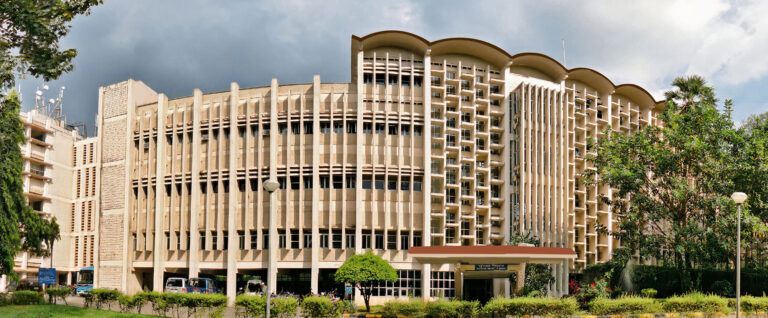
IIT Bombay is not just a college in India. It is practically a religion. From the moment you buy your first coaching module in Class 11, the idea of the Powai campus is drilled into your head. Your parents whisper about it. Your teachers use it as a weapon to make you study harder. You check the JEE Advanced qualifying marks every single week just to see how far away you are from the magic number.
And if you actually crack it—if you actually secure a rank under 3000—you feel like you just won the lottery. You pack your bags, you move to Mumbai, and you walk through the gates of the campus.
Then the reality sets in.
I talk to freshmen at IITB all the time. The psychological shock they experience in the first three months is brutal. For the last two years, you were the smartest kid in your school. You were the coaching center topper. Now, you are sitting in a lecture hall where the guy to your left represented India in the Physics Olympiad, and the girl to your right has been coding in C++ since the eighth grade. You are no longer special. You are just average. And for a lot of kids, that realization completely breaks their ego.
This isn't a motivational post. I am not going to tell you about the beautiful sunset at Vihar Lake or how amazing Mood Indigo is. We are going to strip away the marketing brochure and look at the raw, unfiltered mechanics of surviving IIT Bombay in 2026, starting with the biggest lie coaching centers tell you: the branch change myth.
The Branch Upgrade Bloodbath
Here is exactly how the conversation goes during JoSAA counseling. You have an AIR of 2800. You want Computer Science. Obviously, you aren't getting CSE at IIT Bombay. You aren't even getting Electrical. The portal says you can get Metallurgical Engineering or Civil Engineering at IITB.
Your coaching teacher taps the table and says, "Just take Metallurgy at IIT Bombay. The tag is permanent. Once you get there, just study hard in your first year and upgrade your branch to CSE."
Do not listen to this advice. It is a mathematical trap.
Let me explain how CPI (Cumulative Performance Index) actually works at IIT Bombay. The grading is entirely relative. You are not competing against a syllabus; you are competing against the batch. To get a branch change to CSE, you generally need a CPI of 9.8 or 9.9 out of 10 at the end of your first year.
To get a 9.9 CPI, you have to consistently score in the top 1% or 2% of your classes. Who are your classmates? The kids who got AIR 50. The kids who breathe calculus for fun. You are walking into a bloodbath expecting it to be like your Class 12 board exams. I have seen countless students destroy their mental health, lock themselves in their cramped hostel rooms, and burn out by December, only to end up with an 8.2 CPI. They are permanently stuck in Metallurgy for the next three years. If you want to study Computer Science, check the top NIT cutoffs and take a CSE seat there. Don't gamble your entire career on a 1% probability event.
Verified 2026 Placement Realities
If we want to understand the actual value of the IIT Bombay tag today, we have to look past the newspaper headlines. Every December, the media prints a massive headline: "IIT Bombay Student Bags 3 Crore Package!" They conveniently ignore the fact that the package is in US Dollars, adjusted for extreme cost of living in San Francisco, and the base salary is completely different. Let's look at the actual ground data for the 2026 graduating batch, extracted by the VRSAM internal analytics team.
The hiring landscape has heavily fragmented. The highest tier of placements currently belongs to Quantitative Finance firms—companies like Jane Street, Optiver, and Tower Research. These firms do not care about your branch, but they demand absolute mathematical genius. They hire maybe 10 to 15 students from the entire batch, offering domestic packages north of 45 LPA. These students are almost entirely from the competitive programming circles on campus.
Next is the core software block. If you are in the Computer Science department, you are safe. Despite the global tech slowdown correcting the market over the last two years, IIT Bombay CSE maintains a rock-solid median domestic package of roughly 28 to 32 LPA. However, the software companies visiting campus have drastically tightened their filters. Three years ago, they would let Civil or Chemical engineering students sit for coding rounds. In 2026, automated ATS tracking and strict HR policies mean many mid-tier product companies explicitly lock their forms to "Circuit Branches Only" (CSE and Electrical).
So, what happens to the lower branches? This is the most fascinating part of IIT Bombay's ecosystem. Students in Civil, Metallurgical, and Environmental engineering quickly realize that core engineering jobs in India pay poorly—often starting between 7 to 10 LPA. To bypass this, the lower branches pivot entirely into consulting and finance.
They spend their second and third years ignoring fluid mechanics and instead grinding case studies, joining the campus consulting clubs, and building massive extracurricular profiles. The MBB firms (McKinsey, Boston Consulting Group, Bain) hire aggressively from IIT Bombay. They don't care if you know how a blast furnace works; they care that you survived the IIT JEE filter and can confidently present a slide deck. The median package for these consulting roles sits comfortably around 18 to 22 LPA. The tag absolutely works here, but you have to actively abandon your engineering degree to leverage it.
The Infrastructure and Hostel Shock
Let's step outside the academic block and talk about your daily life. You are probably imagining a lush, modern living space.
IIT Bombay is an old institution. While they are constantly building new infrastructure, a massive portion of the student body lives in hostels that clearly show their age. You will likely be crammed into a double or triple-sharing room that was originally designed for one person back in the 1970s. The walls are thin, the space is extremely tight, and the Mumbai humidity is unforgiving.
But here is the strange part: you won't actually care. The hostel culture is the lifeblood of the campus. Because you are geographically isolated inside the Powai bubble, your hostel wing becomes your entire universe. This is where the magic of IIT Bombay actually happens. You aren't learning from the professors—half the time you will sleep through the 8:30 AM lectures anyway. You are learning from the senior sitting across the hall who is showing you how to bypass a machine learning algorithm, or the junior who just built a drone in the tinkerers' lab.
The peer group is intimidating, but it is also the greatest asset you will ever possess. Just existing in that ecosystem forces you to upgrade your ambitions. If you want to know how the actual qualifying metrics look before you even dream of this peer group, check out our JEE Advanced 2026 guide.
The "Coding on the Side" Exhaustion
I need to revisit the kids who take lower branches and plan to "just code on the side." It sounds like a perfect hack to the system. You get the IIT Bombay brand on your resume, and you learn Python from YouTube in your dorm room.
This works for exactly 15% of the people who attempt it. The other 85% get crushed by the academic system. IIT Bombay does not have a chill syllabus. If you are in Aerospace Engineering, you are dealing with brutal mathematics, fluid dynamics, and intense lab reports. Your professors do not care that you want to be a software engineer; they expect you to pass aerospace exams.
When you are running on 4 hours of sleep trying to finish a core assignment due at 8:00 AM, the absolute last thing your brain wants to do is open LeetCode and solve dynamic programming questions. You end up being a mediocre aerospace engineer with a half-baked understanding of web development. You fall into the gray zone. If you hate the core branch, the next four years will feel like a prison sentence.
Frequently Asked Questions
Is it easy to change my branch to CSE in my second year at IIT Bombay?
No. It is mathematically almost impossible. You are competing against kids who already cleared JEE Advanced. To get a branch upgrade to CSE, you need a CPI (CGPA) of roughly 9.8 or 9.9 in your first year. That means being in the top 1% of a batch where literally everyone is already a certified genius. Do not base your college choice on a branch change.
Should I take Metallurgy at IIT Bombay or CSE at a top NIT?
If you genuinely want to be a software engineer and write code for a living, take CSE at the NIT. If you take Metallurgy at IITB, you will spend your time fighting the core syllabus while begging IT companies to let you sit for their coding rounds. The IIT tag is incredibly strong, but in 2026, tech recruiters care exponentially more about your technical stack and GitHub portfolio.
What do students in lower branches at IIT Bombay actually do?
A massive chunk of them pivot entirely away from engineering. They grind case studies to get into management consulting firms (like McKinsey or BCG), prepare for the UPSC civil services, or get absorbed into corporate finance roles. Very few actually pursue core engineering careers because the starting salaries in Indian manufacturing sectors are significantly lower.
Stop watching cinematic drone footage of the Powai campus. Go look at the actual syllabus for the branch you are being allotted. If you cannot imagine yourself studying those subjects for four years without completely losing your mind, let the seat go. The tag will get you the first interview, but your skills dictate the rest of your life.