
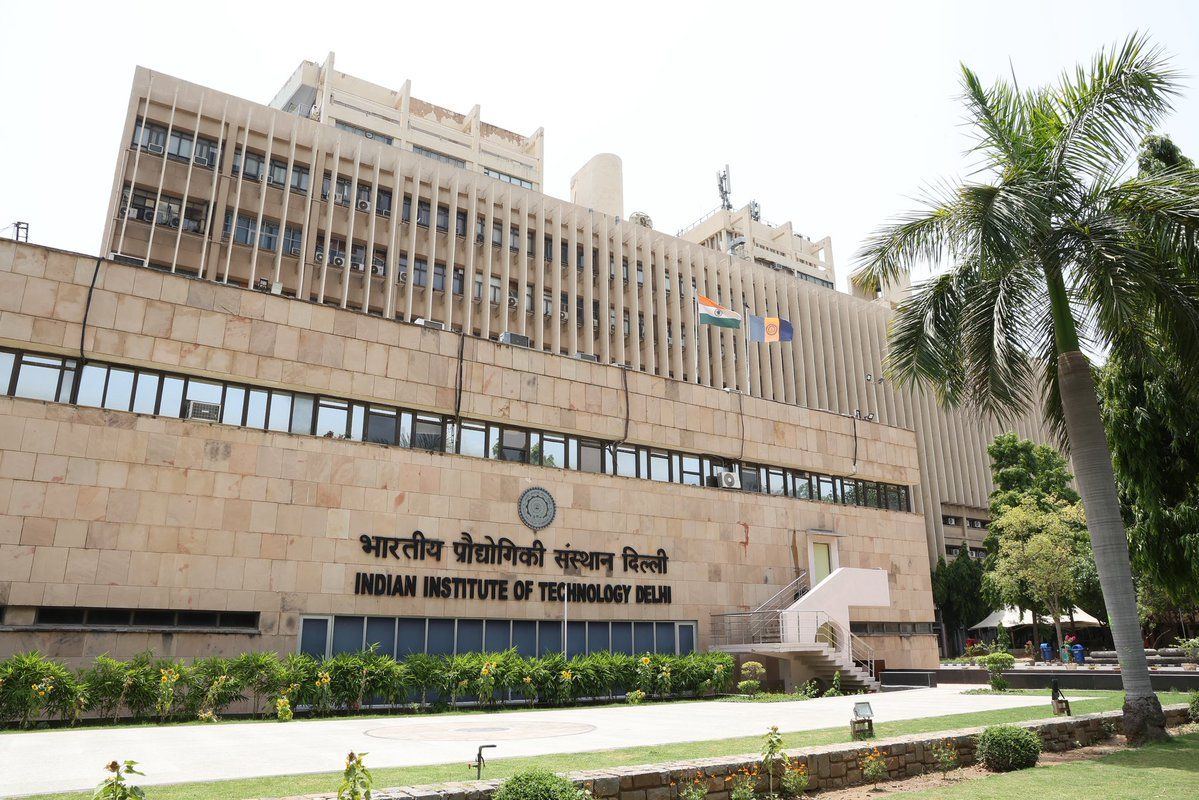
When you clear the JEE Advanced cutoff with a top rank, the debate is almost always the same. Do you go to IIT Bombay or IIT Delhi?
On paper, they look identical. The packages are astronomical. The alumni network is terrifyingly powerful. But the moment you step out of the auto-rickshaw at the Hauz Khas campus gates, you realize you aren't just entering a college. You are stepping onto a corporate launchpad.
IIT Delhi does not have the quiet, isolated, scholarly vibe of an IIT Kanpur or IIT Kharagpur. It is physically located in South Delhi. You walk out of the campus and you are instantly surrounded by high-end cafes, metro stations, and the suffocating pace of the National Capital Region. And that geographic reality completely rewires the brain of every 18-year-old who enrolls here.
You stop thinking about just getting a job. Within three months, you are surrounded by seniors pitching startup ideas, guys doing internships at Gurugram venture capital firms while skipping Tuesday morning lectures, and a culture that worships founders more than researchers. Let's break down exactly what IIT Delhi looks like in 2026, starting with the hard numbers.
IIT Delhi: 2026 At a Glance
Before we talk about the toxic and brilliant parts of the culture, you need to see the baseline data. The fees have crept up steadily, and the branch variety is actually much wider than people assume.
| Category | Current Details (2026) |
|---|---|
| Location | Hauz Khas, South Delhi (Extremely prime real estate) |
| Campus Size | 320 Acres (Compact compared to older IITs, but highly centralized) |
| B.Tech Tuition Fees (4 Yrs) | ~ ₹8.5 Lakhs to ₹9 Lakhs (General Category, excluding mess/hostel) |
| Total Estimated Cost | ~ ₹12.5 Lakhs (Including hostel, mess, and basic personal expenses) |
| Flagship Courses | Computer Science, Mathematics & Computing (MnC), Electrical |
| Unconventional Branches | Textile Technology, Production & Industrial, Biochemical |
| Overall Median Package | ₹20.5 LPA (Heavily skewed by CSE/MnC pulling the average up) |
Note: Fee waivers are available for SC/ST/PwD students and economically weaker sections as per strict government mandates.
VRSAM Analytics: The 2026 Placement Reality
If you want to understand where your career goes after IIT Delhi, you have to ignore the highest package billboards and look at the aggregate placement flows. The VRSAM Internal Analytics Team recently modeled the placement data for the graduating batch of 2026, and the shift from traditional engineering to pure corporate hustle is undeniable.
First, let's address the giants: Computer Science (CSE) and Mathematics & Computing (MnC). These two branches operate on an entirely different financial planet. The median domestic package for these branches consistently sits between ₹32 to ₹36 LPA. However, the hiring ecosystem has evolved. Three years ago, FAANG companies dominated Day 1. In 2026, the real bidding war is happening between High-Frequency Trading (HFT) firms and fast-scaling, heavily funded AI startups based out of Bangalore and Gurugram. These firms are scooping up the top 15% of the batch with massive equity components that traditional IT service companies simply cannot match.
But what happens if you took a branch like Textile Technology or Civil Engineering just to secure the IIT Delhi tag? Our tracking data shows a massive internal pivot. Less than 20% of Textile or Civil graduates actually take up core engineering jobs (which typically offer a sluggish ₹8 to ₹11 LPA starting salary). Instead, they leverage the "NCR Geographic Premium."
Because IIT Delhi is a 45-minute metro ride from Gurugram—one of Asia's largest corporate and startup hubs—students in lower branches spend their weekends networking, taking up shadow internships at venture capital firms, or grinding product management case studies. By the time placement season arrives, these students are being hired en masse by top-tier management consulting firms (McKinsey, BCG, Bain) and unicorn startups as Product Managers or Growth Analysts. The median package for these non-technical corporate roles easily hits ₹18 to ₹22 LPA. The IIT Delhi tag acts as an absolute VIP pass to corporate India, provided you are willing to completely abandon your engineering syllabus to chase it.
The Startup Distraction Trap
I need to warn you about the biggest trap on this campus. Entrepreneurship is basically in the air conditioning here. The alumni list is ridiculous—founders of Flipkart, Zomato, Meesho, and basically half the Indian startup ecosystem walked these halls.
When you arrive in your first year, you will be pressured to build something. You will join e-cells. You will sit in hostel rooms until 4 AM arguing about user acquisition costs for an app idea that doesn't exist yet.
Here is the reality: 95% of those dorm-room startups fail before the third semester. But the damage to your CGPA is permanent. The academic curriculum at IIT Delhi is unforgiving. The professors grade on a strict relative curve. If you spend your first two semesters pretending to be a CEO instead of studying thermodynamics and basic electrical engineering, your CGPA will tank to a 6.5.
Once your CGPA falls below 7.5, a massive chunk of Day 1 companies will automatically filter your resume out during placements. You can have a great startup story, but if the automated HR software rejects you based on grades, no human will ever hear it. Do not let the hustle culture blind you to the fact that you are fundamentally there to pass exams.
Campus Life: Hauz Khas vs The Hostels
The physical contrast of living at IIT Delhi is bizarre.
On one hand, you are situated in Hauz Khas. You can walk out of the gate and immediately access some of the most expensive, aesthetic cafes, art districts, and nightlife in the country. The exposure to the real world is instant. You aren't trapped in a remote college town.
But then you walk back into your hostel. The older hostels (like Karakoram, Aravali, or Nilgiri) are heavily weathered. You are going to be living in incredibly cramped spaces. The rooms are tiny, the Delhi heat in May is absolutely punishing, and you will find yourself staring at a dusty ceiling fan wondering why a premier institute feels like a government quarters building. You will complain about the mess food constantly. But honestly, the friction of living in close quarters with incredibly smart, ambitious people is what actually shapes your personality.
Frequently Asked Questions
Is IIT Delhi better than IIT Bombay for Computer Science?
Academically and in terms of base placements, they are almost statistically identical. The difference is entirely cultural. IIT Bombay has a slightly more isolated, heavily campus-centric vibe, whereas IIT Delhi is deeply plugged into the aggressive startup and corporate culture of the NCR region. Pick based on the city vibe you prefer.
Should I take Textile Engineering at IIT Delhi just for the tag?
Only if you plan to abandon engineering. Textile Technology students rarely stay in textiles. They use the massive IIT Delhi brand name to pivot into management consulting, product management, or finance. If you actually want to write code for a living, you should check out the top NIT alternatives and take CSE there instead of fighting the core system at IITD.
How hard is the academic curriculum at IIT Delhi?
It is incredibly punishing. The grading system is purely relative, meaning you are competing for marks against some of the highest-ranking students in the country. If you get caught up in the Delhi party scene or spend too much time building an app in your first year, your CGPA will tank permanently, effectively locking you out of the best placement interviews.
IIT Delhi is basically a pressure cooker sitting in the middle of a corporate jungle. It will not hold your hand. If you have a rank that gets you in, prepare to hustle harder in your first two years than you did for JEE Advanced. The tag opens the door, but you still have to walk through it.