
There is an old, running joke among coaching circles that rings incredibly true today. If you want to build a billion-dollar consumer app, you go to IIT Delhi. If you want to be a management consultant in a nice suit, you go to IIT Bombay. But if you actually want to learn hardcore engineering, you go to IIT Kanpur.
I talk to a lot of students checking the JEE Advanced qualifying ranks right now. They look at Kanpur and they just see it as another legacy IIT. They don't realize the cultural and academic shock waiting for them.
IIT Kanpur operates in its own little world. It is geographically isolated. The city of Kanpur is heavily industrialized, dusty, and chaotic, which means you basically never leave the 1000-acre campus gates. Because there are no fancy cafes or venture capital networking events right down the street, all of that pent-up teenage energy gets funneled into two things: extreme academic competition and intense dorm-room coding.
You are not going to coast through four years here. The professors at IIT Kanpur are traditionalists. They do not care about your startup idea. They care about your mid-semester exam on partial differential equations. Let's look at the hard data on how this academic rigor translates into actual career placements in 2026.
IIT Kanpur: 2026 At a Glance
Before we dive into the grading curve, you need to understand the physical and financial scale of the institute.
| Category | Current Details (2026) |
|---|---|
| Location | Kanpur, Uttar Pradesh (Isolated campus, heavily industrialized surrounding city) |
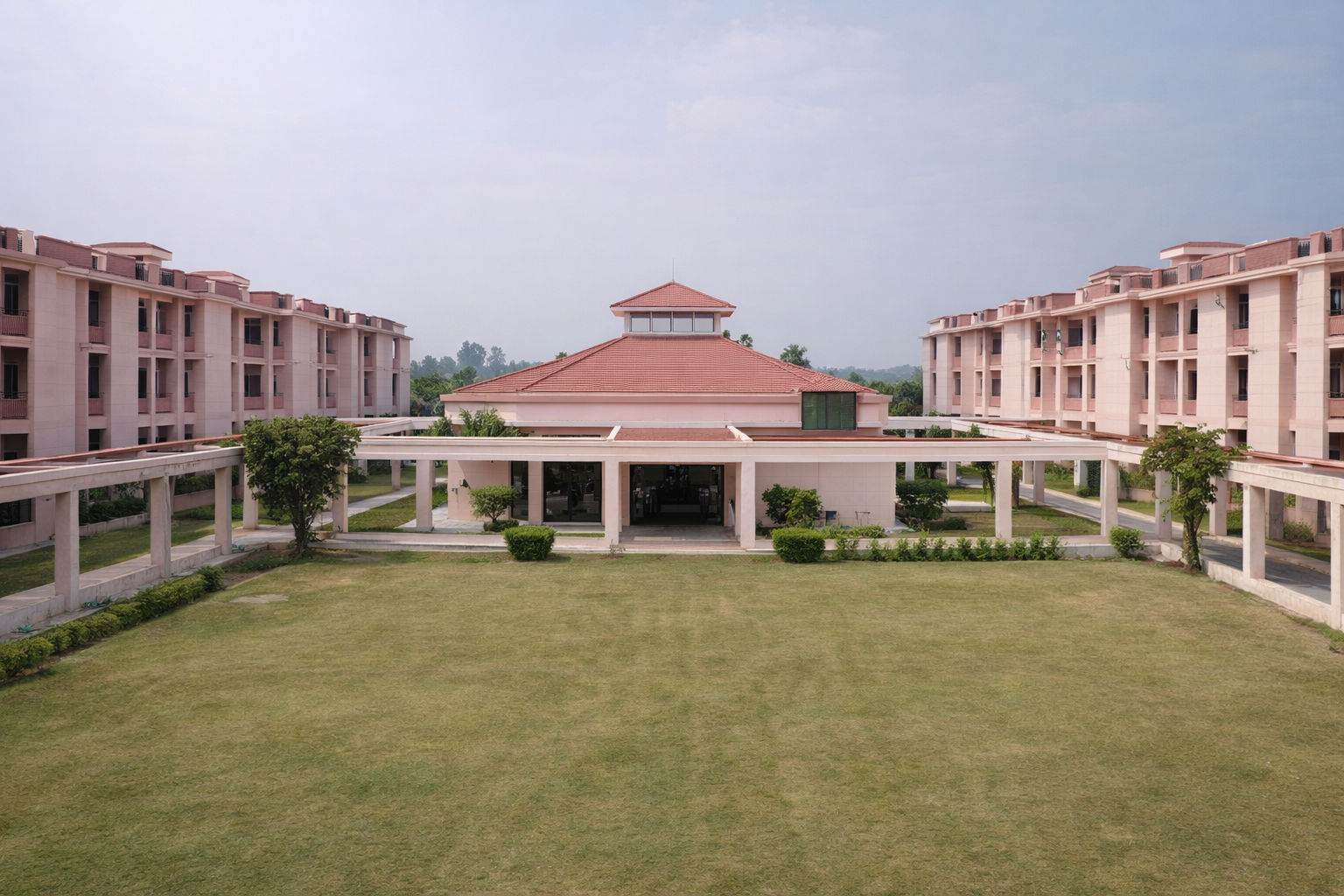
| Campus Size | 1,055 Acres (A massive, highly secured green bubble with an actual airstrip) |
| B.Tech Tuition Fees (4 Yrs) | ~ ₹8.5 Lakhs (General Category, excluding hostel and mess) |
| Total Estimated Cost | ~ ₹12 Lakhs (Including standard living expenses and harsh winter clothing) |
| Flagship Courses | Computer Science, Mathematics & Scientific Computing, Electrical |
| Unconventional Branches | Aerospace Engineering, Materials Science, Earth Sciences |
| Overall Median Package | ~ ₹21.5 LPA (Highly skewed by astronomical HFT packages in CSE/MnC) |
Note: 100% tuition fee waivers exist for SC/ST students. Economically weaker sections (family income < ₹1 Lakh) also receive full tuition waivers as per standard central government rules.
VRSAM Analytics: The Grading Curve & Elite Placements
To accurately evaluate IIT Kanpur in 2026, we have to look past the generic NIRF metrics and analyze the actual student telemetry. The VRSAM Internal Analytics Team recently modeled the academic and placement data for the graduating batch, and the most striking anomaly is the institution's grading curve. It is mathematically punishing.
The academic framework at IIT Kanpur is deeply traditional. The professors do not inflate grades. The relative grading curve is structurally designed to suppress the median Cumulative Performance Index (CPI). At institutions like IIT Delhi or some newer IIITs, a median student might comfortably float around an 8.0 or 8.2 CGPA by simply turning in assignments on time. At IIT Kanpur, our data shows the median batch CPI is actively pinned closer to a 7.2 or 7.4. You are competing against the top 1% of the country for a 'B' grade. This brutal academic friction triggers severe burnout in the second year, especially among students who took lower branches hoping for an easy branch change.
However, this strict grading has a fascinating reverse effect on Day 1 placements. Top-tier recruiters—specifically High-Frequency Trading (HFT) firms like Jane Street, Tower Research, and Quadeye—are fully aware of the "Kanpur Curve." When scanning resumes, these quantitative finance firms actively adjust their internal cutoffs. A student with an 8.5 CPI at IIT Kanpur is frequently evaluated with the same technical respect as a 9.3 CGPA student from a Tier-1 NIT. The algorithmic and mathematical rigor taught here is so universally respected that the lower nominal grades do not penalize students during elite technical hiring. The median package for the CSE and Mathematics & Scientific Computing (MnC) departments safely hovers at an elite ₹33 to ₹35 LPA.
The placement routing for core branches, however, tells a different story. Kanpur produces arguably the best Mechanical and Aerospace engineers in the country. Yet, the geographic isolation of Uttar Pradesh means fewer mid-tier hardware startups or manufacturing firms conduct physical campus drives compared to colleges in Pune or Chennai. Consequently, our tracking indicates that over 28% of core engineering graduates entirely bypass the domestic placement cell. Instead, they leverage the immense global reputation of IITK professors to secure fully-funded MS and PhD admits at Ivy League and top-tier US universities (like MIT, Stanford, and Caltech). IIT Kanpur is a massive export hub for global researchers.
For the students who want software jobs but are stuck in core branches like Civil or Materials Science, the path is arduous but structured. Because there are no city distractions, the campus coding culture—driven heavily by the Programming Club—is intense. But the academic load of the core subjects is heavy. Students who manage to juggle thermodynamics lab reports while grinding LeetCode do get placed in software roles, but the exhaustion rate is high. Our strategic recommendation is raw: do not choose a lower branch at IIT Kanpur expecting a relaxed four years. You will be ground down by the syllabus. You must be prepared for the most rigorous academic gauntlet in Indian undergraduate education.
The Isolation and Extreme Weather
Let's step outside the academic block for a minute. You need to know what living here actually feels like.
Kanpur experiences extreme weather. In May, the heat is absolutely blistering. In December and January, the cold is bone-chilling. Waking up for an 8:00 AM lecture in January when the fog is so thick you can barely see the hostel gate requires a massive amount of willpower.
Because the outside city is crowded and largely unappealing for student hangouts, the campus bubble is absolute. Everything you need is inside the 1,000 acres. There are open-air theater screenings, heavily subsidized campus cafes, and a massive sports complex.
This isolation creates an incredibly tight student community. You will trauma-bond with your hostel mates over impossibly hard assignments at 3 AM. The festival culture here—specifically Antaragni (Cultural) and Techkriti (Technical)—is massive because the students pour all their trapped energy into organizing them. It is a completely different vibe than the commuter-heavy culture of DTU or IIT Delhi.
The Double Major and Minor Hack
While the branch change process at IIT Kanpur is a bloody gladiator pit (you basically need a 9.8 CPI), the institute offers something arguably better: immense academic flexibility.
IITK has an incredibly robust Double Major and Minor system. If you take Physics or Civil Engineering but you actually want to be a software developer, you can officially apply for a minor in Computer Science. It requires extra credits, and you have to maintain a decent CPI to be eligible, but it gives you legitimate academic backing when sitting for IT placements.
You aren't just "coding on the side" in your dorm room and hoping a recruiter believes you. You are taking actual algorithmic courses from IIT professors and getting it printed on your transcript. This flexibility is a massive lifesaver for students who missed out on their preferred branch during JoSAA counseling but are willing to put in the extra hours.
Frequently Asked Questions
Is it true that IIT Kanpur has the hardest exams?
Yes. The grading system is notoriously tough. The professors are highly traditional and demand absolute conceptual clarity. You cannot rote-learn your way through a mid-semester exam here. The papers are designed to test the absolute limits of your understanding, and the relative curve means you are fighting geniuses just to secure a decent grade.
Does the location of Kanpur hurt tech placements?
For top-tier CSE and Quantitative Finance roles, absolutely not. The big tech companies (Google, Microsoft, Jane Street) will fly anywhere to hire an IITK computer science graduate. However, if you are looking for off-campus startup internships or want to build a consumer startup yourself, the geographic isolation hurts significantly compared to the immediate corporate access of IIT Delhi or Bombay.
Is the campus safe and livable?
The campus itself is a massive, highly secured, beautiful green bubble. It is essentially its own functioning mini-city with cafes, sports complexes, and airstrips. The outside city of Kanpur is chaotic and heavily industrialized, but most students rarely leave the campus anyway because everything they need is inside the gates. You are perfectly safe inside.
IIT Kanpur is not for the faint-hearted. If you want a relaxed college life, look at the top NITs. But if you are willing to embrace the grind, the alumni network and the sheer resilience this campus builds in you will pay off for the rest of your life. Lock your choices wisely.