
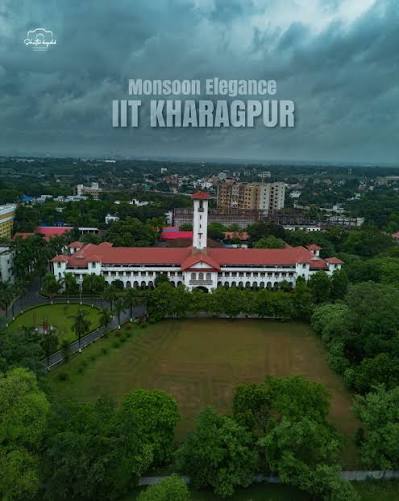
When you are sitting in front of your JoSAA counseling portal, IIT Kharagpur (KGP) feels like an absolute giant. And physically, it is. It is the oldest IIT in the country, and it spans over 2,100 acres. That is essentially a small city. You literally cannot survive here without a bicycle.
Because of its sheer size, KGP takes in a massive number of students every year. The B.Tech batch size here completely dwarfs places like IIT Delhi or IIT Madras. They offer branches that most other colleges don't even have—things like Ocean Engineering, Agricultural and Food Engineering, Quality Engineering Design, and Exploration Geophysics.
This creates a very specific type of counseling trap. A student clears the JEE Advanced cutoff with an average rank—maybe 7,000 or 8,500. They can easily get a solid Electronics or Computer Science seat at a mid-tier NIT. But then they see "Agricultural Engineering at IIT Kharagpur" pop up on their screen. The temptation of the original, legacy IIT tag is overpowering. They lock the seat, pack their bags, and take a train to West Bengal.
When you arrive at KGP, the reality of the batch size hits you immediately. You are not a big fish in a small pond anymore. You are a tiny fish in an ocean. The professors will not spoon-feed you. The placement cell cannot guarantee a job for all 1,800 of you. If you don't aggressively build your own network and skill set here, you will simply vanish into the crowd.
IIT Kharagpur: 2026 At a Glance
To understand the scale of KGP, you have to look at the numbers. The diversity of courses means the placement averages are wildly stretched between the top and bottom branches.
| Category | Current Details (2026) |
|---|---|
| Location | Kharagpur, West Bengal (~120 km from Kolkata) |
| Campus Size | 2,100+ Acres (Massive, heavily forested, and highly self-contained) |
| B.Tech Tuition Fees (4 Yrs) | ~ ₹8.5 Lakhs (General Category, excluding hostel and mess) |
| Total Estimated Cost | ~ ₹12 Lakhs to ₹13 Lakhs (Including standard living expenses) |
| Flagship Courses | Computer Science, Electronics & Electrical, Mathematics & Computing |
| Unconventional Branches | Agricultural & Food, Ocean Engg, Mining, Exploration Geophysics |
| Overall Median Package | ~ ₹19 LPA (Massive variance between CSE and lower core branches) |
Note: 100% tuition fee waivers exist for SC/ST/PwD students, and generous subsidies apply for low-income families as per standard central government rules.
VRSAM Analytics: The 2026 Placement Reality
If you want to understand the placement dynamics of IIT Kharagpur in 2026, you must understand the concept of "Volume Dilution." The VRSAM Internal Analytics Team processed the recruitment data for the graduating batch, and the most striking feature is how fiercely competitive internal hiring has become compared to five years ago.
When a software company like Google, Microsoft, or a major FinTech firm visits IIT KGP, they are not just interviewing 100 Computer Science students. Due to the massive batch size, they are flooded with resumes from ECE, Mathematics, and entirely self-taught coders from Mechanical and Chemical engineering. The internal competition to clear the initial coding test is arguably harder than the actual interview. However, for those in the CSE and Mathematics & Computing departments, the median package remains absolutely elite—easily clearing the ₹32 to ₹35 LPA threshold.
The data gets much darker when we analyze the obscure branches—Agricultural, Ocean, and Mining Engineering. In previous decades, mass IT recruiters would visit IIT campuses and sweep up 300 to 400 students from these lower branches into standard software roles. That safety net is completely gone. The 2024 tech slowdown permanently changed hiring algorithms. In 2026, many mid-tier IT companies simply do not allow Agricultural or Mining students to sit for their campus drives. They explicitly restrict eligibility to "Circuit Branches" (CSE, ECE, EE).
As a result, lower-branch students face a harsh reality. The core jobs in agriculture or ocean engineering are extremely sparse in India and often offer starting salaries below ₹8 LPA. To survive, these students must execute a hard pivot. Our tracking shows that over 40% of students in these bottom branches spend their third and fourth years heavily preparing for data analytics roles, applying off-campus, or grinding for the CAT exam to enter IIMs. If you take a lower branch at KGP, you must be prepared to hustle entirely on your own for off-campus opportunities, leaning heavily on the alumni network rather than relying on the campus placement cell.
The Alumni Network
Let's talk about the absolute greatest asset IIT Kharagpur possesses: its alumni network. It is older, deeper, and arguably more powerful in Silicon Valley and the Indian startup ecosystem than any other Indian institute.
When you look at the CEOs of Google (Sundar Pichai) or IBM (Arvind Krishna), you are looking at the KGP network. But it isn't just about famous billionaires. It's about the mid-level engineering managers sitting in startups in Bangalore, Hyderabad, and Seattle.
Because the campus is so geographically isolated, the bond formed between students here is famously tight. This translates directly into the professional world. If you are a third-year student struggling to get an on-campus internship because you are in the Mining branch, you can reach out to KGP alumni on LinkedIn. The conversion rate of these cold messages turning into off-campus interviews is staggeringly high compared to other colleges. The alumni actively protect and hire their own.
This network is the only reason taking a lower branch at KGP can be justified over a top NIT. If you are highly proactive, you can use the brand name to bypass the automated resume screeners and get your foot in the door at a venture capital firm or a tech startup. But you have to ask for it. The network won't come to your hostel room and hand you a job on a silver platter.
Hall Culture and "Illu"
You cannot talk about IIT Kharagpur without talking about "Hall Culture."
At KGP, you don't just live in a hostel; you belong to a "Hall of Residence" (like Patel, Azad, Nehru, or RK). Your Hall becomes your primary identity. The competition between these Halls in sports, cultural events, and technology is incredibly fierce.
The pinnacle of this is Diwali, specifically an event called Illumination (or "Illu"). The entire campus basically shuts down academics for weeks. Halls compete to build massive, intricate wire structures holding thousands of traditional diyas to create glowing, multi-story art displays. It requires insane levels of teamwork, sleep deprivation, and engineering coordination.
This culture teaches you project management and soft skills better than any MBA textbook. However, there is a dark side. The pressure to participate in Hall activities is immense from the seniors. If you are someone who just wants to sit in your room, study quietly, and maintain a 9.5 CGPA, you will face a lot of friction. You have to learn how to aggressively manage your time, or the extracurriculars will completely cannibalize your academic grades.
The "DepC" Trap (Department Change)
Just like at IIT Bombay, coaching institutes love to sell you the dream of a "Department Change" (DepC) at Kharagpur. They will tell you to take Ocean Engineering and just upgrade to CSE after your first year.
Please wipe this delusion from your mind. The grading at IIT KGP is highly competitive. Everyone in your first-year classes is a JEE Advanced ranker. To slide into CSE, you need a CGPA hovering near 9.8 or higher. That means near-perfect scores in Mathematics, Physics, Chemistry, and Engineering Drawing.
Most students who attempt this burn themselves out entirely. They skip the Hall culture, isolate themselves in the library, and still end up with an 8.5 CGPA—which is a great score, but not enough to get CSE. They get stuck in their original branch but missed out on all the networking and fun of the first year. Accept the branch you are allotted, and focus your energy on learning to code or building your profile, rather than fighting a mathematically rigged grading curve.
Frequently Asked Questions
Is it a bad idea to take Agricultural Engineering at IIT Kharagpur?
It depends entirely on your long-term goal. If you want to be a software developer right out of college, taking Agricultural Engineering will make your life extremely difficult as many IT companies will filter out your resume based on your branch. But if you plan to pivot into finance, consulting, or an MBA later, the IIT KGP tag is incredibly valuable.
How bad is the location of Kharagpur compared to IIT Delhi or Bombay?
It is geographically isolated. Kharagpur is essentially a railway town roughly two and a half hours away from Kolkata. You do not have the immediate corporate access, venture capital events, or weekend cafe culture of Delhi or Mumbai. Your entire life, for four years, will be completely restricted to the inside of the 2100-acre campus bubble. You have to be okay with that.
What is "Hall Culture" and is it toxic?
Hall culture is the fierce loyalty and competition between the different student hostels (Halls of Residence) at IIT KGP. It involves intense preparation for events like Illumination and Spring Fest. It builds massive alumni networks and soft skills, but it can absolutely become toxic if senior pressure distracts you completely from your academic CGPA.
IIT Kharagpur is not a place that will hold your hand. The massive batch size means you are entirely responsible for your own success. If you are proactive, the network here will set you up for life. But if you expect the college to do the work for you, you will graduate with an obscure degree and no job. Choose carefully.